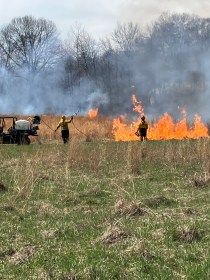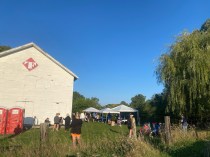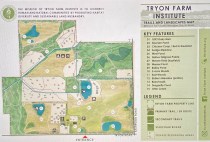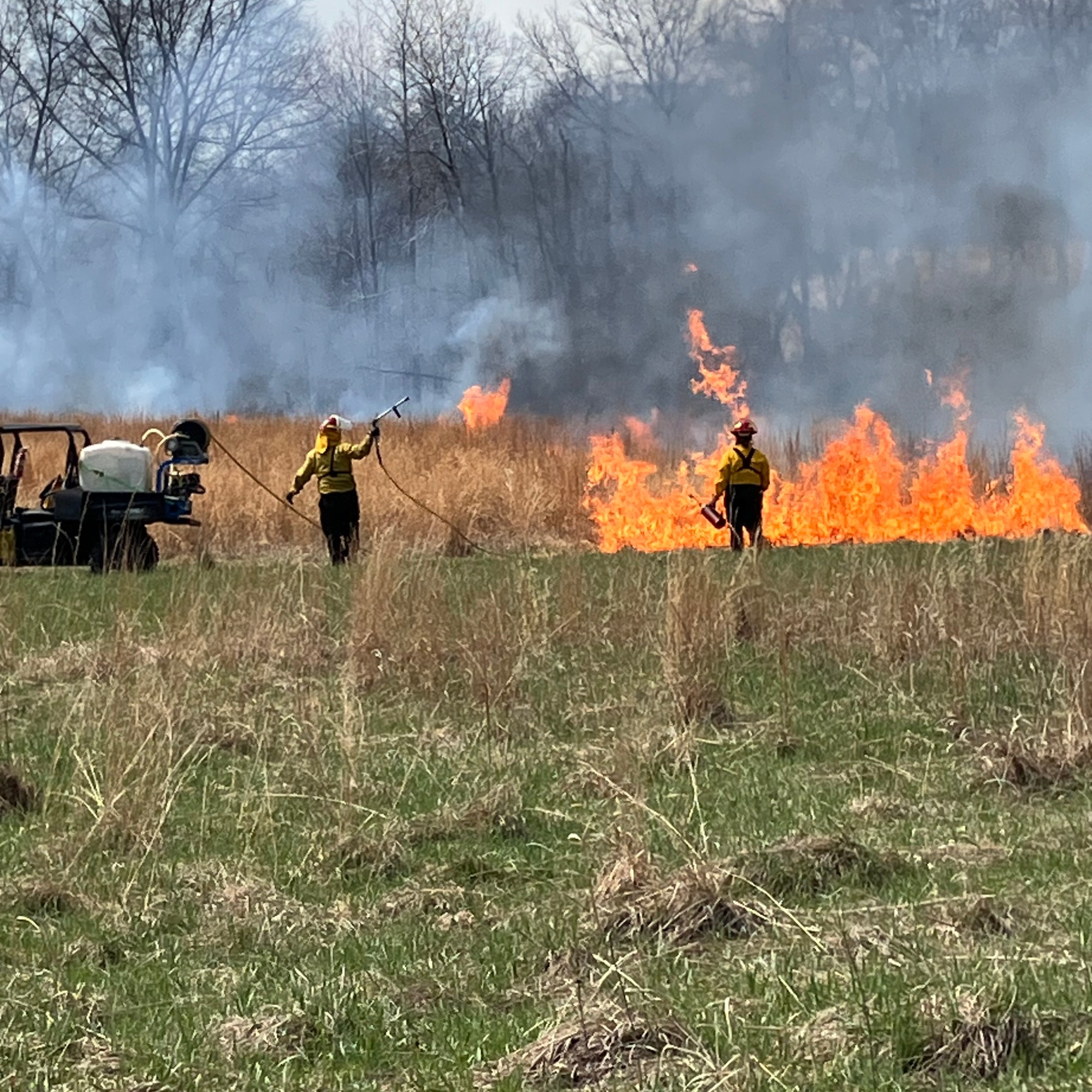
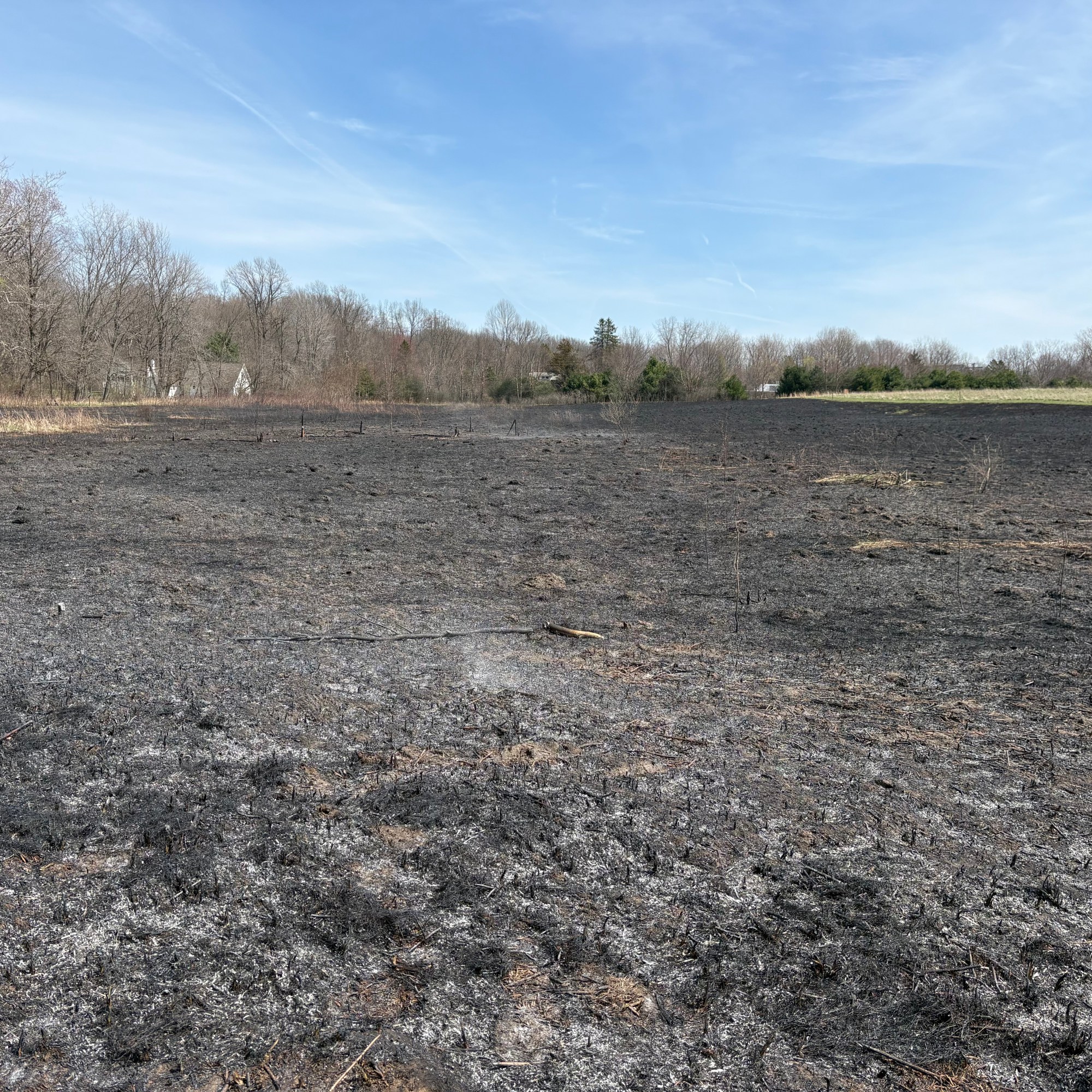
On April 8th, 2026, Tryon Farm Institute hired Pizzo and Associates to conduct controlled burns within TFI prairies in order to provide invasive species control and overall health.
Prescribed fire has long been a cornerstone of land conservation. From restoring native plant communities to reducing wildfire risks, this intentional use of fire is an effective and affordable tool for land management. According to Jarred Brooke, Extension wildlife specialist in Purdue University’s Department of Forestry and Natural Resources, these practices may enable Indiana landowners to achieve their management objectives.
“Prescribed fire helps control invasive species, improve wildlife habitat, and rejuvenate ecosystems that depend on periodic fire,” Brooke said. “It’s a practice rooted in both science and tradition.”
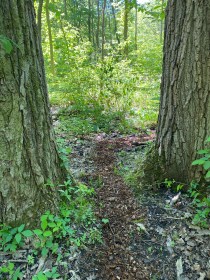
Before Tryon Farm was a farm, it was part of the extensive Indiana dune-and-swale ecosystem (that is, sand dunes and shallow, vegetated, low-lying wetlands) that evolved after the retreat of the last glacier, roughly 14,000 years ago. These oak and beech woodlands, wetlands, marshes and dunes harbor globally significant communities of plants and animals. (Fun fact: Indiana Dunes National Park, while relatively small, has the third most native plant species of any national park in the U.S.). Some of the biggest (and oldest) trees at Tryon are oaks and beeches. These trees evolved under the influence of periodic fires – fires set by Native peoples to keep woods open and clear for game and travel and fires set by lightning strikes. When the land we know as Tryon Farm become a dairy farm, some of the land was kept open through grazing and mowing. But the fires were suppressed as people settled in the area and lacked the historic knowledge of the importance of periodic fire to healthy ecosystems.
TFI has returned fire to the prairies and we all will benefit from their long term health.